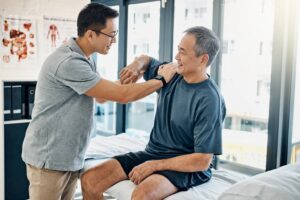
Hip surgery can be a turning point. For many older adults, it is the first step towards walking again after a fracture or a serious hip problem. But surgery itself is only the beginning. The real journey back to daily life happens during recovery. This guide explains what recovery after hip surgery usually involves, and how good rehabilitation supports a safe return to independence.
Why Recovery Matters As Much As Surgery
Many families think that once the surgery is done, the hard part is over. In truth, recovery is just as important. After hip surgery, the body needs time and support to heal. Muscles may be weak. Movement may feel painful or frightening at first. If the person rests too much and moves too little, they can lose strength quickly and recovery becomes harder.
This is why guided rehabilitation is so valuable. It helps the person move safely, rebuild strength, and slowly return to the things they used to do.
The Early Stage of Recovery
In the early stage after surgery, the focus is on comfort and safe, gentle movement. Pain management is important, because a person who is in pain will avoid moving. Once the medical team says it is safe, the person is usually encouraged to start moving in small ways. Even simple movements, done safely, help the body begin to recover.
At this stage, mobility aids such as a walking stick are often used. They give support and confidence while the hip is still healing. A therapist can show the person how to move, stand, and sit safely to protect the healing hip.
Rebuilding Strength and Movement
As recovery continues, the focus shifts to rebuilding strength and improving movement. Physiotherapy plays a central role here. A physiotherapist guides the person through exercises that strengthen the muscles around the hip, improve balance, and make walking steadier.
Recovery is done gradually. Exercises usually start gentle and become a little harder as the person grows stronger. This step-by-step approach helps avoid injury and keeps the person motivated as they see progress.
Returning to Daily Life
The real goal of recovery is not just to walk in a therapy room. It is to return to daily life. This means being able to get out of bed, walk to the bathroom, climb a few steps, and manage daily tasks safely. Occupational therapy can help the person relearn these daily activities and adapt where needed.
Progress shows up in small wins. Standing a little longer. Walking a little further. Needing a little less help each week. These small steps add up to real independence over time.
Staying Safe and Preventing Another Fall
After hip surgery, preventing another fall is very important. A new fall could damage the healing hip and set recovery back. Families can help by keeping the home safe, removing trip hazards, improving lighting, and making sure the person uses their mobility aid as advised. Balance and strength exercises, guided by a therapist, also help lower the risk of future falls.
Every Recovery Is Different
It is important to remember that recovery speed is different for everyone. It depends on age, general health, bone strength, and how active the person was before surgery. Some people recover faster, others need more time. A personalised recovery plan, guided by a care team, helps match the pace to the person and supports safe, steady progress.
About GeriaMed
GeriaMed is a recovery centre in Penang, with locations in George Town (Jalan Burma) and Nibong Tebal. We provide specialised care for fractures, focusing on pain management and restoring mobility. We also work together with orthopaedic surgeons and provide rehabilitation after surgery, using physiotherapy, mobility aids, and a gradual recovery approach. Our experienced team of doctors, nurses, therapists, pharmacists, and caregivers helps each patient regain strength and independence. If your loved one needs structured recovery support after hospital discharge, you can also explore our GeriaMed Patient Care Package (14-day and 30-day options), or contact us to learn more.